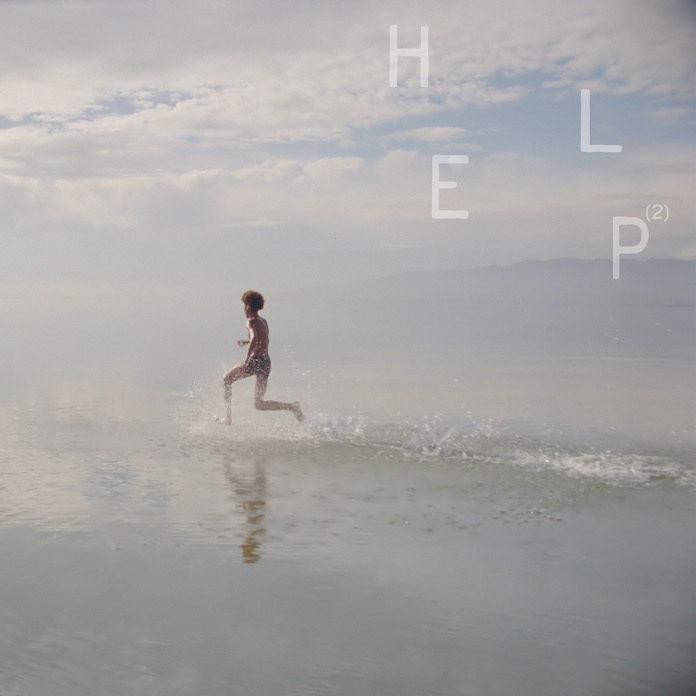
“HELP(2)” - The Story Behind War Child’s Epic New Charity Album
Difference Makers
Jul 02, 2026
Thirty-one years after the original HELP album changed fundraising forever, a new generation of artists gathered at Abbey Road to create something equally powerful—and perhaps more necessary.
There’s a moment in every creative project where you realize you’re part of something larger than yourself. For the artists who gathered at Abbey Road Studios to record tracks for War Child’s HELP(2), that moment came quickly, often unexpectedly, sometimes in the form of eight-year-olds running around the studio with camcorders.
The original 1995 record—curated by Brian Eno, assembled by Terry Hall and Tony Crean, shepherded through by Andy MacDonald—became a benchmark for how to unite artists across genres and egos under a single, genuinely important cause. Its tracklist featured a who’s who of ’90s UK music legends—Radiohead, Suede, Blur, Portishead, Massive Attack, Oasis, The Stone Roses, Manic Street Preachers, The Charlatans, The Chemical Brothers, and more. Its legacy within the charity War Child is incalculable.
As Rich Clarke, Head of Music at War Child UK, explains: “The heritage of that album, the impact and legacy it’s had for us as an organisation, but also in terms of credibility within the music industry, is second to none.”
But legacy can be a trap. How do you make a new record that honors the original without simply recreating it? How do you capture that same creative energy and collective purpose three decades later, when the world is fractured differently, the music industry has transformed entirely, and the need—if anything—has only deepened?
The answer, War Child discovered, lay in asking one question: “Who’s our Eno?”
The first name on everyone’s lips was James Ford. In summer 2024, Ford had just produced Fontaines D.C.’s Romance—an album that had elevated a band already respected into genuine cultural significance. More than that, Ford represented something crucial: a producer who understood both the technical demands of making great music and the human dynamics of managing artists with conflicting visions.
“He had a lot of opinions on who he wanted to work with,” Clarke recalls, “and it all coalesced quite quickly. I think it was all within that same Venn diagram, and then it was like, let’s go, basically.”
But Ford’s role went beyond simply booking artists. Like Eno before him, he was charged with curating not just individual tracks, but a body of work—something that, when listened to in sequence, felt coherent and purposeful despite the diversity of voices involved.
That curation extended to the sequencing, handled by Ford alongside Toby L (who runs Transgressive Records), and Luke Williams from artist management company This is Music Ltd (who looks after Ford). The running order wasn’t arbitrary. As Clarke explains, the album moves through distinct emotional territories: “Coming out of the blocks with the Arctic Monkeys track is like, bang, right? We’re on it. There’s a little end of each side, and then it kind of moves from quite punchy into a little more alternative, and then there’s some songs with conflict themes that come through, and it kind of ends on the redemptive power of love.”
It’s a structure that feels almost classical in its architecture—a narrative arc rather than a collection of songs.
What struck everyone involved was how seriously the artists took the project. There were no throwaway submissions, no “here’s something we had lying around” attitudes. Artists came to the table with intention.
Take Arctic Monkeys’ “Opening Night.” The band hadn’t recorded together in three and a half years. There was pressure, uncertainty about whether they could still capture lightning in a bottle. But when they entered the studio, they brought a song they’d begun years earlier and never completed—and with Ford’s guidance, they realized they were finally ready to finish it properly.
That sense of the album as an occasion rippled through the entire project. Foals’ Yannis Philippakis had a track about conflict themes that he’d been carrying around for five years, unable to find a home for it. Strings arrangements he wanted to add, ideas that never quite landed elsewhere. Then came War Child, and suddenly there was a context, a reason, a place where music about suffering could exist alongside the determination to help.
Even the collaborations that emerged felt organic rather than manufactured. When Damon Albarn came to Abbey Road to record his track, he brought orchestral ambitions. Suddenly, every artist in the studio that day—Black Country, New Road; Pulp; English Teacher; and others—found themselves enlisted as a choir. Graham Coxon, originally scheduled to feature on English Teacher’s track, ended up playing guitar for Olivia Rodrigo’s contribution. Ezra Collective and Greentea Sounds, who’d wanted to work together for years, finally had the perfect excuse.
“It was organic,” Clarke insists. “Some of it was an excuse. Some of it was like, ‘Okay, well, this is the perfect environment.’ And then things like the Anna Calvi track, ‘Sunday Light’—we got sent a demo ages ago, loved the song, and then we heard Adrian Utley from Portishead was going to play on it. I was like, ‘That’s amazing because that ties the original to this. It’s brilliant.’ And then we found out the Monday after they recorded it on the Saturday, Nilüfer Yanya and Ellie Rowsell and Theo Ellis from Wolf Alice had all turned up and taken part in it.”

Another valued contributor, Arlo Parks, one of the most thoughtful voices in contemporary music, approached HELP(2) with characteristic intentionality. She created “Nothing I Could Hide.”
“I made that song in the same series of days that I did in New York making ‘2Sided,’” she explains, referencing a track from her 2026 album, Ambiguous Desire. “I wanted to create something that felt raw and introspective and painful in a way, but about what it means to be human, what it means to kind of open yourself up to the world.”
What struck Parks most was the breadth of the project. “I love the fact that this record blends artists that have been doing this for a long time, you know, like Arctic Monkeys or Depeche Mode, down to people like me, Cameron Winter, or Beabadoobee. I feel like it was a real blend of people who use their voices in different ways, but are very true in their artistry.”
For Parks, this wasn’t about activism as performance. It was about recognizing that “art can create a real difference and really kind of move the dial forward.” In a moment when so many artists feel paralyzed by the scale of global suffering, she found something clarifying: this record, these voices, this intention—it mattered.
This was curation as creation—Ford and his team didn’t just book artists; they created the conditions for unexpected magic to happen.
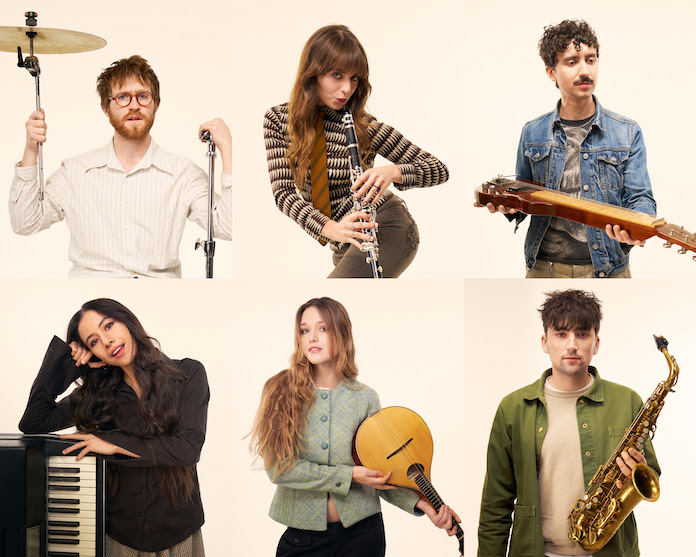
The physical location mattered enormously. Abbey Road isn’t just a studio; it’s a mythology. When May Kershaw from Black Country, New Road walked into the famous space for the first time—not just to record, but to be part of a broader creative community—she felt it immediately.
“It was very surreal,” she recalls. “I got my Beatles shirt on. Yeah, it was amazing, really surreal. And also, just everyone kind of walking around in the canteen. It’s a bit like, ‘We weren’t supposed to be there. Try to stay calm, stay calm,’” she laughs.
But what made the Abbey Road experience truly transformative was Jonathan Glazer’s concept for the visual component: By Children, For Children.
Glazer, the acclaimed director, came up with an image of unbridled childhood joy—light, water, a child running. Then he proposed something radical: what if the children filming the content were actual children from conflict zones? What if the project wasn’t about exploiting images of suffering, but about centering the agency and resilience of children themselves?
War Child had long maintained strict ethical boundaries around how they represent the children they work with. “We won’t show children in distress or visibly injured,” Clarke explains. “That obviously takes a lot of the chunk of that more emotive fundraising out. But this concept of just showing the universality of childhood, mixing the studio footage with kids filming—all filmed by the children themselves.”
Teams went to Yemen, Ukraine, Gaza, and Sudan. The children didn’t just appear in the videos; they created them.
And yes, there were moments of beautiful chaos. At one point, a child pushed Arctic Monkeys’ Alex Turner out of the way to get a better shot. The egos that might have bristled at such treatment simply… didn’t. The presence of actual children—running around Abbey Road—changed the entire dynamic. “The artists were so wonderful,” Clarke says simply.
Black Country, New Road’s contribution came together quickly, almost accidentally. “We were recording on Friday, and we hadn’t got anything a week before,” May Kershaw remembers. “Lewis [Evans] had written a new song, and he sent us a voice recording of it. We already liked it. And so it all came together in three rehearsals.”
What’s notable about Kershaw’s account is how the band approached the project without overthinking it. “We tend to not really dwell, or ask directly,” she explains. “There were a few bits that we all kind of wrote together, but I feel like there were more like, yeah, choices for words, as opposed to what the overall message was.”
This unpretentiousness—the willingness to make art without necessarily explaining it—felt essential to the album’s success. Not every contribution needed to be a political statement. Sometimes it was enough to show up, make something beautiful with talented people, and trust that the context would provide the meaning.
When the time came to record the choir section with Damon Albarn, Kershaw found herself standing between The Smiths’ Johnny Marr and Pulp’s Jarvis Cocker. It was surreal, yes, but it was also fundamentally collaborative—not a hierarchy of famous people, but musicians working together toward a shared goal. “It was such an honor to be with these amazing other artists,” she says.

Yet there’s a tension running through the project, acknowledged but unresolved. In a UK newspaper article, James Ford mentioned that some artists had expressed nervousness about the project being “too political.” This raised a question that has haunted artists for decades: what is our responsibility as creators in moments of global crisis?
Rich Clarke doesn’t shy away from the complexity. “I think James might’ve been a little taken out of context,” he suggests, “because I think the conversation might’ve been more around the volume of music. We had reached a point where we had 20, 22 active tracks being worked on, and we were kind of running out of vinyl.”
But Jim Benner, Global Music Lead at War Child, frames it differently. “I have a lot of awkward conversations with people who I presume would be easily won over, but some become hesitant because of the nature. We see ourselves as neutral. We don’t care which flag is flying over us. We’re there for the children who are always the innocent victims.”
It’s a fair point. War Child works across all conflict zones—the organization’s mandate isn’t political; it’s humanitarian.
Yet the broader question remains. Arlo Parks addresses it thoughtfully: “I feel like it’s something we could do more of…there’s always more that we could be doing. But it has to feel natural. It can’t be contrived. It doesn’t come out the right way if it’s not sung from the heart.”
Black Country, New Road are acutely aware of the struggles of the likes of the Palestinian people, but they don’t necessarily write explicitly political songs. “I’m not sure if we’re capable of that at the moment,” Kershaw admits. “Being able to do our music and make music that feels right for us…because it has to feel natural.”
What gives the album its urgency, beyond the quality of the music or the star power of the artists, is the simple fact of need. Benner shares a statistic that lands like a punch: “In the first HELP album, I forget what the statistic was for how many children living in conflict, but now it’s one in five.”
One in five children globally are living in conflict zones. The number has doubled since 1995. War Child is gearing up for its biggest ever humanitarian response in Gaza, scaling up operations in Sudan (where the humanitarian disaster is the largest in the world), expanding into the Central African Republic.
“There’s been some exciting…exciting is a tough word when you talk about our work,” Rich Clarke says carefully. “But we’re gearing up for our biggest ever humanitarian response in Gaza. That’s an opportunity to make a real impact on a demographic that’s completely traumatized.”
This is the context in which the album exists. It’s not a luxury project. It’s not rich musicians playing at activism. It’s a necessary tool to raise awareness and funds for an organization doing frontline work in the most dangerous places on Earth.
The choice to call the album HELP(2) rather than something entirely new sparked some discussion. There’s been criticism that they’re just leaning on The Beatles/Paul McCartney template (McCartney, McCartney II, McCartney III, etc.). But Clarke and Benner are clear-eyed about this. Benner explains, “There’s been a Beatles thing running through each release that War Child has done.” (McCartney was featured on the original HELP album, participating in a cover of The Beatles’ “Come Together” alongside Paul Weller of The Jam and Noel Gallagher of Oasis.)
More importantly, the title serves a purpose: it immediately signals that this is part of a continuum, a lineage of using music to help children in crisis. It’s not reinventing the wheel; it’s honoring what came before while creating something necessary for now.
“There’s some great stuff,” Clarke says. “But it’d be deeply unfair if you work with an act for 12 months, and then so-and-so comes along and you’re off the record. Everything that was worked on was honored.”

What emerges from all of this—from Rich Clarke’s logistics to James Ford’s curation to May Kershaw’s three-rehearsal song to Arlo Parks’ raw introspection—is something that transcends the sum of its parts. It’s a record made by people who believe, genuinely, that music matters. That artists have a platform and a responsibility to use it. That the act of creating something beautiful in service of protecting vulnerable children isn’t naive or self-serving; it’s fundamentally human.
Benner frames it perfectly: “The music doesn’t necessarily have anything to do with it—our colleagues are on the front line actually helping children in dangerous parts of the world. But this record makes artists and their fans feel like they’re able to participate somehow in trying to do something good.”
That’s the real achievement of HELP(2). Not that it reunited superstars, or that it was made at Abbey Road, or even that it features some of 2026’s most important music. It’s that it created a moment where being an artist meant something more than making art. Where standing up for children in crisis became as natural as the music itself.
Thirty-one years after HELP changed what was possible, HELP(2) proves that the mission remains urgent, the artists remain willing, and the need remains very real.
HELP(2) is out now.
For further information, visit www.warchild.org.uk and childreninconflict.org.
Read Andy Von Pip’s review of HELP(2) here and Lee Campbell’s review here.
Read our in-depth article on the original 1995 HELP album, from our ’90s Issue.
HELP(2) Tracklist:
01. Arctic Monkeys - “Opening Night”
02. Damon Albarn, Grian Chatten & Kae Tempest - “Flags”
03. Black Country, New Road - “Strangers”
04. The Last Dinner Party - “Let’s do it again!”
05. Beth Gibbons - “Sunday Morning”
06. Arooj Aftab & Beck - “Lilac Wine”
07. King Krule - “The 343 Loop”
08. Depeche Mode - “Universal Soldier”
09. Ezra Collective & Greentea Peng - “Helicopters”
10. Arlo Parks - “Nothing I Could Hide”
11. English Teacher & Graham Coxon - “Parasite”
12. Beabadoobee - “Say Yes”
13. Big Thief - “Relive, Redie”
14. Fontaines D.C. - “Black Boys on Mopeds”
15. Cameron Winter - “Warning”
16. Young Fathers - “Don’t Fight the Young”
17. Pulp - “Begging for Change”
18. Sampha - “Naboo”
19. Wet Leg - “Obvious”
20. Foals - “When the War is Finally Done”
21. Bat For Lashes - “Carried my girl”
22. Anna Calvi, Ellie Rowsell, Nilüfer Yanya & Dove Ellis - “Sunday Light”
23. Olivia Rodrigo - “The Book of Love”
Subscribe to Under the Radar’s print magazine.
Support Under the Radar on Patreon.

Most Recent
- Nottingham Waterfront Festival 2026, The Canalhouse, Nottingham, UK, July 4, 2026 (Review) —
- Sammy Hagar @ British Airways ARC, London, UK, July 9, 2026 (Review) —
- Def Leppard @ The O2, London, UK, July 2, 2026 (Review) —
- The Last Dinner Party Share New Single “Knocking At The Sky” (News) —
- Premiere: DD Island Shares New Single “Setting Sun” (News) —

Comments
Submit your comment